
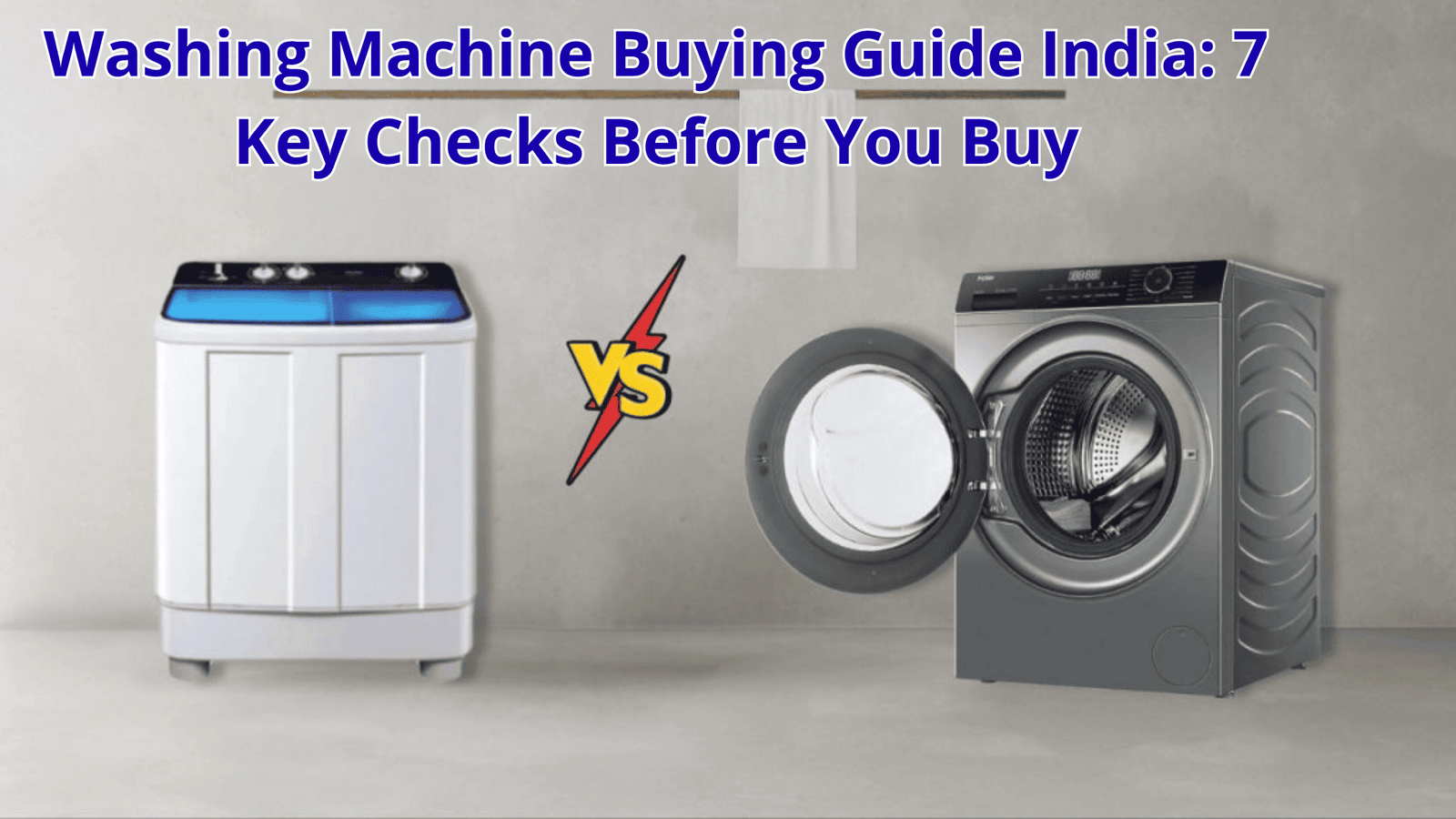
Buying a washing machine in India isn’t as simple as picking a brand you recognize. Between front-load, top-load, capacity options, and inverter motors, the choices can overwhelm anyone shopping for the first time. This washing machine buying guide breaks down exactly what matters, so you spend your money on features you’ll actually use.
Front-Load vs Top-Load: Which Fits Your Home?
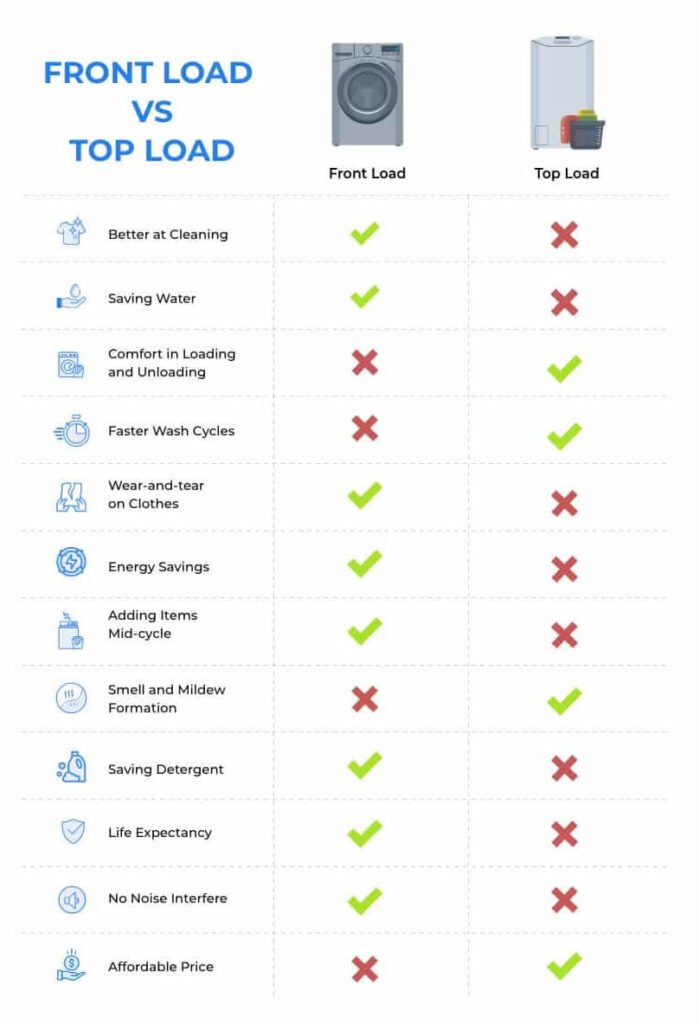
Front-load machines clean more thoroughly and use roughly 40-50% less water per cycle, since the drum only needs partial filling to work through gravity-driven tumbling. They’re gentler on fabrics too, because there’s no central agitator scraping against clothes.hindustantimesyoutube
Top-load machines win on convenience and price. They’re typically 20-25% cheaper upfront, have shorter cycle times, and don’t require bending or kneeling to load and unload — a real consideration for elderly users or anyone with back issues.
| Factor | Front-Load | Top-Load |
|---|---|---|
| Water usage | Lower (40-60L/cycle) youtube | Higher (~120L/cycle) youtube |
| Upfront cost | 20-25% more expensive hindustantimes | More affordable hindustantimes+1 |
| Ease of loading | Requires bending hindustantimes+1 | No bending needed croma |
| Wash cycle length | Longer croma | Shorter croma |
| Fabric care | Gentler, less wear hindustantimes | More agitation, more wear hindustantimes |
| Stacking with dryer | Possible tcl | Not possible tcl |
If your household does heavy daily laundry and cares about water bills, front-load wins. If you’re budget-conscious or have mobility concerns, top-load is the practical pick.
Choosing the Right Capacity for Your Family
Washing Machine Buying Guide Capacity is where most buyers overspend or underspend. A rough sizing guide that most Indian buying guides converge on:
- 1-2 people: 6 to 6.5 kg is sufficient for light, occasional loadskritireviews+1
- 3-4 people: 7 to 8 kg covers daily family washing, and this size sells the most in India for good reasoninstagram+1
- 5+ people: 8 to 10 kg handles larger families, plus bulky items like blankets and curtainskritireviews
Buying a machine one size larger than you need wastes water and electricity per cycle, since most machines don’t scale water use down proportionally for smaller loads.
Inverter Motors: Worth the Extra Cost?
Inverter motors adjust speed based on load size rather than running at one fixed speed, which cuts electricity use and reduces motor noise over the machine’s life. They also tend to last longer since they avoid the wear of constant start-stop cycling that traditional motors go through.
One important caveat for Indian households: if you rely on an inverter (power backup) during outages, check your inverter’s wattage rating. Washing machines with a heater function need 800-1200W of backup capacity, while non-heater models need only 400-600W — and most home inverters in India are rated 600-800VA, which often can’t run heater cycles.techenclave
Star Ratings and Water Efficiency Explained
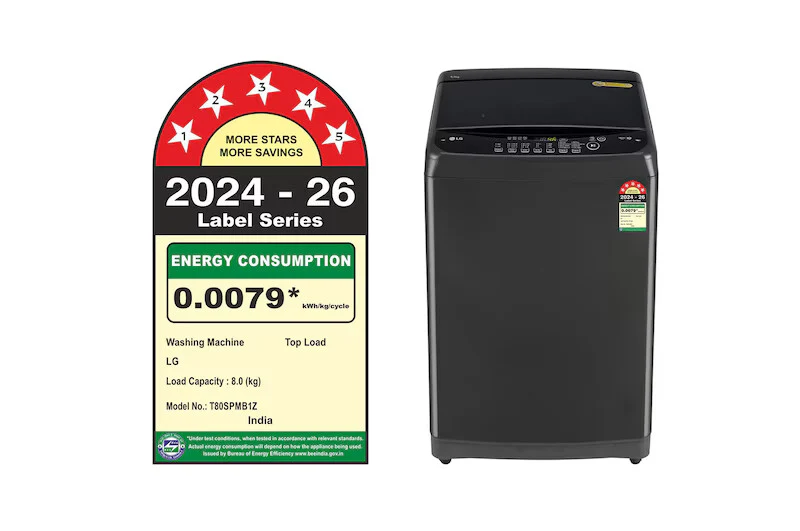
BEE (Bureau of Energy Efficiency) star ratings, mandatory in India since January 2024, tell you how efficiently a machine uses electricity per wash cycle — 5-star fully automatic front-load models can use 20-30% less energy than 1-star models, translating to roughly ₹2,000-3,000 in annual savings. Top-load 5-star models save comparatively less, around ₹1,500-2,500 a year, since their baseline energy consumption is already lower per cycle. Pair the star rating with water consumption data on the label, since a 5-star electricity rating doesn’t automatically mean low water usage, especially for top-load models.
The Real Cost Isn’t the Price Tag — It’s the Running Cost
Most buyers compare only the sticker price, but water, electricity, and detergent add up over years of ownership. Front-load machines typically cost more upfront but claw back savings through lower water and detergent use per cycle, since they don’t need a fully submerged load to wash effectively.
Spin speed matters more than people realize here too. Front-loaders generally spin faster, pulling more water out of clothes before the drying stage — useful if you line-dry in monsoon season or use a separate dryer, since less residual water means less drying time and energy. If your household heats water internally for hygiene washes, this compounds the savings further, since less water needing to be heated means lower electricity draw per cycle.
The practical takeaway: if you do frequent, large loads, the front-load premium often pays for itself within 2-3 years through water and detergent savings. If you wash smaller, infrequent loads, the difference is less likely to justify the higher upfront cost.
Top Features to Check Before Buying
Beyond load type and capacity, a few features determine day-to-day satisfaction:
Wash programs: Look for a dedicated quick-wash cycle and a hygiene/steam option if you have young kids or allergy concerns — steam cycles handle allergens and deep stains better than standard cycles.
Noise levels: Front-load machines generally run quieter during spin cycles, which matters if your utility area is near a living or bedroom space.electrolux+1
Build quality and hard water handling: If your water supply is hard (borewell or high-mineral municipal supply, common across much of India), look for models with dedicated hard-water wash technology, since mineral buildup shortens machine life and affects wash quality over time.youtube
Budget vs Premium: What Changes at Each Price Range
Most Indian buyers shop within specific budget bands, and here’s roughly what changes as you move up:
- Under ₹15,000: Basic top-load machines, no inverter, standard wash programs onlyinstagram
- ₹15,000-₹25,000: Inverter motors become common, better BEE ratings, some smart/app connectivity
- Above ₹25,000: Front-load standard, steam wash, AI-based load sensing, premium hard-water handling, and longer warrantiesinstagram
Spending above ₹20,000 for a front-load machine is generally considered worthwhile long-term due to water and electricity savings, according to multiple buyer guides.instagram
Washing Machine Buying Guide India comes down to your household size, water quality, and how much you’re willing to pay upfront versus save over time. Match capacity to your actual laundry frequency rather than buying “extra room” you won’t use, and always check your home’s inverter capacity before choosing a heater-equipped model.
Also check: Double Door Refrigerator Buying Guide India: 9 Checks
2 Replies to “Washing Machine Buying Guide India: 7 Key Checks Before You Buy”
[…] you are already familiar with the plumbing setup mentioned in our Washing Machine Buying Guide India, prepping your kitchen for a dishwasher will be […]
[…] have you checked? washing machine article […]