

Scraping dried dal and tough masala stains from a steel pot is nobody’s favorite chore. For years, Indian buyers dismissed dishwashers as western appliances incapable of handling heavy-duty Indian cooking. Today, that perception is changing fast. Modern dishwashers come with high-temperature cycles designed specifically for our oily, spice-heavy utensils.
However, buying a dishwasher is a significant investment that requires a shift in your daily kitchen habits. If you are looking for a reliable dishwasher buying guide india, you need facts, not manufacturer sales pitches. Will it actually clean your heavy kadhai? Do you need special plumbing? How much will it cost to run every month?
This guide breaks down the six practical realities you must check before adding a dishwasher to your Indian kitchen.
Are Dishwashers Actually Useful for Indian Kitchens?
Yes, but they require a learning curve. A dishwasher does not simply mimic a human scrubbing a pot. Instead, it uses high-pressure jets of highly heated water (often up to 70°C) mixed with strong detergents to melt away grease and food particles.
You must scrape leftover solid food into the dustbin before loading the machine, but you do not need to pre-rinse the plates. The biggest adjustment for Indian households is learning how to load the appliance correctly so that water reaches every corner of every vessel.
1. Decoding Capacity: What Are “Place Settings”?
Dishwasher capacity is measured in “place settings” rather than liters or kilograms. One standard place setting consists of a dinner plate, a dessert plate, a single glass, a soup bowl, a teacup, and a set of cutlery.
If a machine says it has a 14-place setting capacity, it holds 14 of those sets. However, Indian meals involve bulky cooking vessels, pressure cookers, and large mixing bowls, which eat up multiple place settings very quickly.
Why 13 or 14 Place Settings is the Sweet Spot
For an Indian family of three to five people, a 13 or 14-place setting freestanding dishwasher is highly recommended.
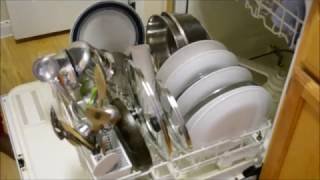
- Bottom Rack: Used for heavy kadhais, pressure cookers (without the lid/gasket), and large plates.
- Middle Rack: Used for smaller plates, katoris (bowls), and glasses.
- Top Rack: Usually a dedicated tray for spoons, forks, and ladles.
Tabletop models (6 to 8 place settings) are too small for heavy Indian cookware. They are only suitable for bachelors or couples who mostly eat out and only need to wash basic plates and mugs.
2. Will It Clean Kadhais and Pressure Cookers? (Utensil Checks)
The short answer is yes. The long answer is that the success of a dishwasher depends entirely on the material of your utensils.
Dishwashers use highly alkaline detergents and scalding hot water. While this combination easily melts away stubborn ghee and dried gravies from stainless steel, it will ruin certain materials within a single wash.
What You Cannot Put in a Dishwasher
Before you buy, evaluate your current kitchen cabinets. If your kitchen runs primarily on aluminum, you will need to replace those vessels with stainless steel or continue washing them by hand.
| Utensil Material | Dishwasher Safe? | Why? |
| Stainless Steel | Yes | Cleans perfectly; comes out highly polished and sanitized. |
| Glass & Ceramic | Yes | Safe, provided they are not delicate, hand-painted antiques. |
| Aluminum | No | The harsh detergent causes oxidation, turning aluminum permanently black. |
| Cast Iron | No | The hot water strips the seasoning, causing immediate rust. |
| Non-Stick (Teflon) | No | High heat and water pressure will peel the non-stick coating over time. |
| Wood / Bamboo | No | Wooden spatulas and chopping boards will warp and crack. |
Buying Tip: When comparing kitchen upgrades, choosing compatible appliances makes a huge difference. Just as you might debate between a filterless vs baffle filter chimney based on your cooking style, choose your dishwasher based on your primary cookware materials.
3. Hard Water and Plumbing Realities in India
Most Indian cities struggle with high TDS (Total Dissolved Solids) hard water. Hard water reduces detergent efficiency and leaves cloudy, white scale marks on your clean glasses and steel plates.
Modern dishwashers combat this using an internal water softener unit. To keep this unit functioning, you must routinely top up the machine with dishwasher salt (which is different from regular table salt). You also need a rinse aid liquid to help dishes dry without water spots.
Plumbing Requirements:
Installing a dishwasher is nearly identical to installing a front-load washing machine. You need three things within reach of the installation spot:
- A dedicated 15-Amp electrical socket.
- A continuous fresh water inlet tap.
- A drainage pipe leading directly to an outlet.
If you are already familiar with the plumbing setup mentioned in our Washing Machine Buying Guide India, prepping your kitchen for a dishwasher will be straightforward.
4. The Real Running Cost: Electricity, Water, and Detergent
Many buyers hesitate because they assume dishwashers waste massive amounts of water and drive up the electricity bill. The opposite is true for water consumption.
Washing a load of dishes by hand under a running tap easily wastes 40 to 60 liters of water. A full-size 14-place setting dishwasher uses only 9 to 14 liters of water for an entire load. The machine recycles and filters the water internally during the wash cycle.
Here is a realistic breakdown of the running costs per cycle in India:
- Electricity: A standard cycle consumes between 1 to 1.5 units of power (because it heats its own water). Cost: ₹8 to ₹12 per wash.
- Consumables: Detergent tablet/powder, dishwasher salt, and rinse aid cost roughly ₹10 to ₹15 per wash.
- Total Daily Cost: Expect to spend around ₹20 to ₹30 per cycle.
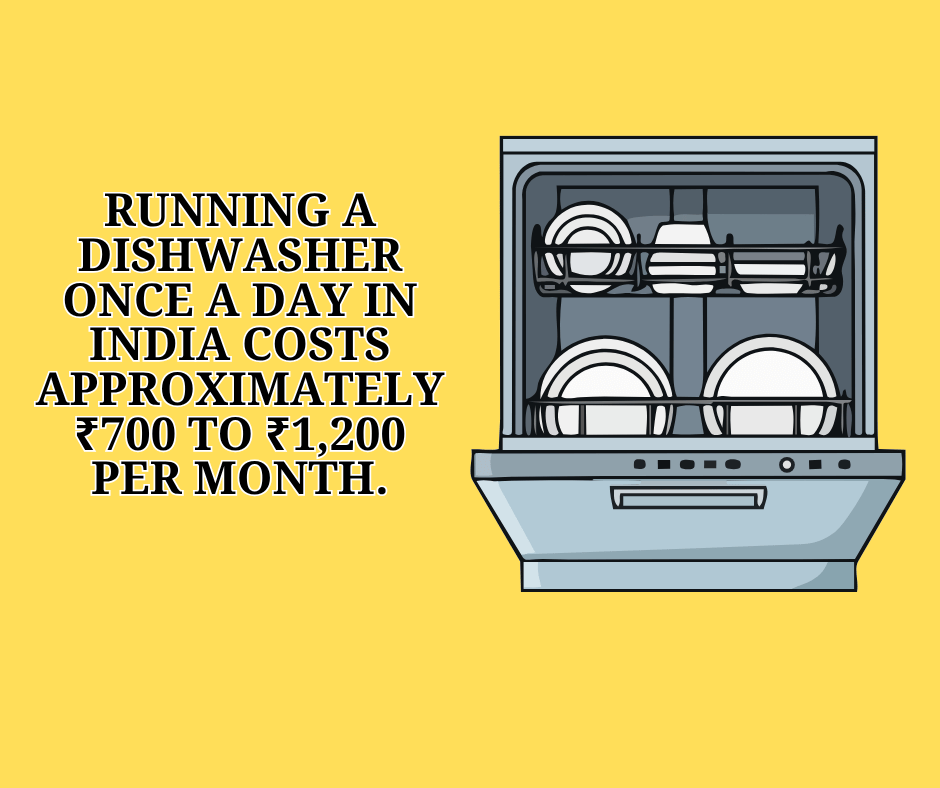
Over a month, running the machine once a day will cost you approximately ₹600 to ₹900. To ensure you are buying an energy-efficient model, look for products rated highly by the Bureau of Energy Efficiency (BEE), which regulates standard energy consumption labels in India.
5. Built-in, Freestanding, or Tabletop: Which Fits Your Space?
Choosing the right form factor depends entirely on your kitchen layout.
- Freestanding Dishwashers: The most common and practical choice for Indian homes. They look like washing machines, have their own finished top and sides, and can be placed anywhere with plumbing access. You can take them with you if you move rental houses.
- Built-in Dishwashers: Designed for modular kitchens. These slide under the counter and lack a finished front door. You must attach a custom wooden cabinet door to match the rest of your kitchen.
- Tabletop Dishwashers: Compact units that sit on your counter. They hold very few dishes and struggle with large Indian pots. Avoid these unless you have severe space constraints.
6. Essential Wash Programs You Actually Need
While brands market machines with 8 to 10 different wash programs, you will realistically only use three or four on a daily basis. Look for these essential modes:
- Intensive / Kadhai Mode (70°C): This is non-negotiable for an Indian kitchen. It uses the hottest water to melt away stubborn grease, turmeric stains, and dried food from pots and pans.
- Auto / Normal Wash (55°C – 65°C): The daily driver program. It uses sensors to detect how dirty the water is and adjusts the cycle time automatically.
- Quick Wash (30 – 45 Minutes): Perfect for lightly soiled items like tea mugs, snack plates, or fresh glasses when hosting guests. It does not include a drying cycle.
- Half Load: Saves water and electricity when you only have enough dirty dishes to fill one rack.
Final Verdict: Who Should (and Shouldn’t) Buy a Dishwasher?
A dishwasher is an incredible labor-saving appliance that sanitizes your cookware far better than manual washing ever could. However, it requires a disciplined approach to loading and an understanding of compatible utensils.
You should buy a dishwasher if:
- You use mostly stainless steel, glass, and ceramic cookware.
- You are tired of relying on unpunctual domestic help.
- You want heavily sanitized plates and utensils for better hygiene.
- You are planning your purchases around major discount events. Check out our Freedom Sale guide to time your purchase for maximum savings.
You should avoid a dishwasher if:
- Your kitchen relies heavily on aluminum vessels, cast iron skillets, or non-stick pans.
- You lack the floor space and plumbing access near your sink.
- You find it tedious to scrape food scraps into the bin before loading.
Buying the right capacity and ensuring you have the right water inlet setup will dictate your success with this appliance. Choose a 13 or 14-place setting from a reputable brand with strong after-sales service in your city, and you will rarely have to scrub a greasy kadhai again.
One Reply to “Dishwasher Buying Guide India: 6 Checks for Indian Kitchens”
[…] you are still weighing whether a dishwasher makes sense for your household, the Dishwasher Buying Guide India covers the six checks every Indian kitchen should run before committing to any […]