

Stainless steel appliances look great in a modular kitchen, right up until the first tadka splatters across the chimney or a water spot dries on the fridge door. If you have been searching for how to clean stainless steel appliances without scratching or dulling them, the good news is that you probably already have everything you need in your kitchen cabinet.
This guide covers daily wipe-downs, hard water stains, chimney grease, and the mistakes that quietly damage steel finishes over time — with specific notes for Indian conditions like hard tap water and heavy-oil cooking.
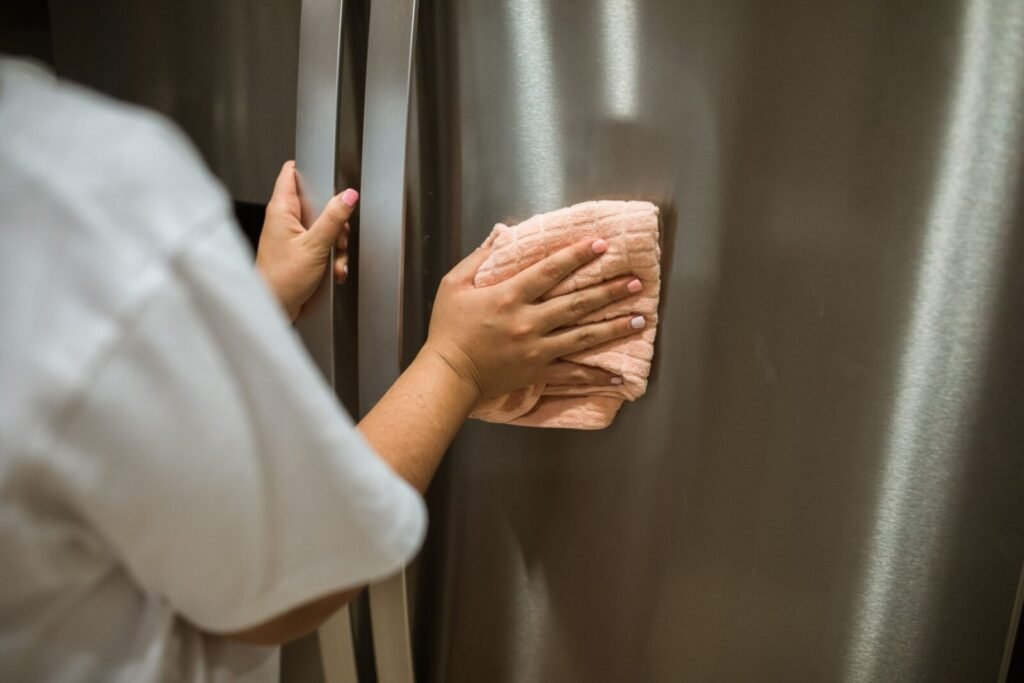
What You’ll Need
Before you start, gather a few basics. Almost all of these are already sitting in a typical Indian kitchen:
- Two or three microfiber cloths (an old soft cotton cloth works too, but avoid anything textured)
- Mild dish soap (Vim or any regular liquid works fine)
- White vinegar or fresh lemon juice
- Baking soda (meetha soda)
- A small amount of olive, coconut, or mineral oil for polishing
- A soft-bristled brush for chimney grills and corners
Skip steel wool, scouring pads, and anything abrasive. Stainless steel scratches more easily than its name suggests, and those scratches trap dirt and become permanent.
Daily Cleaning: The 3-Wipe Method
Most stainless steel appliances only need a quick routine to stay presentable. This is close to what the American Cleaning Institute recommends as the general approach for any stainless steel surface:
- Wash. Mix a few drops of dish soap into warm water. Dip a microfiber cloth in it, wring it out well, and wipe the surface.
- Rinse. Use a second cloth dampened with plain water to remove any soap residue.
- Dry. Buff the surface with a completely dry cloth so no water is left to spot.
The step people skip most often is drying immediately, and it is the one that matters most in India’s hard-water areas.
Always wipe in the direction of the grain — the faint lines running across the steel. Run your hand over the surface first; you’ll feel it’s smoother in one direction. Wiping against the grain can leave fine scratches that show up as a hazy pattern under kitchen lighting.
How to Remove Hard Water Stains
Cities with hard water — Delhi, Chennai, and much of Rajasthan among them — leave chalky white spots on steel sinks and appliance panels once water evaporates. These minerals are mildly acidic-soluble, so vinegar or lemon juice cuts through them easily.
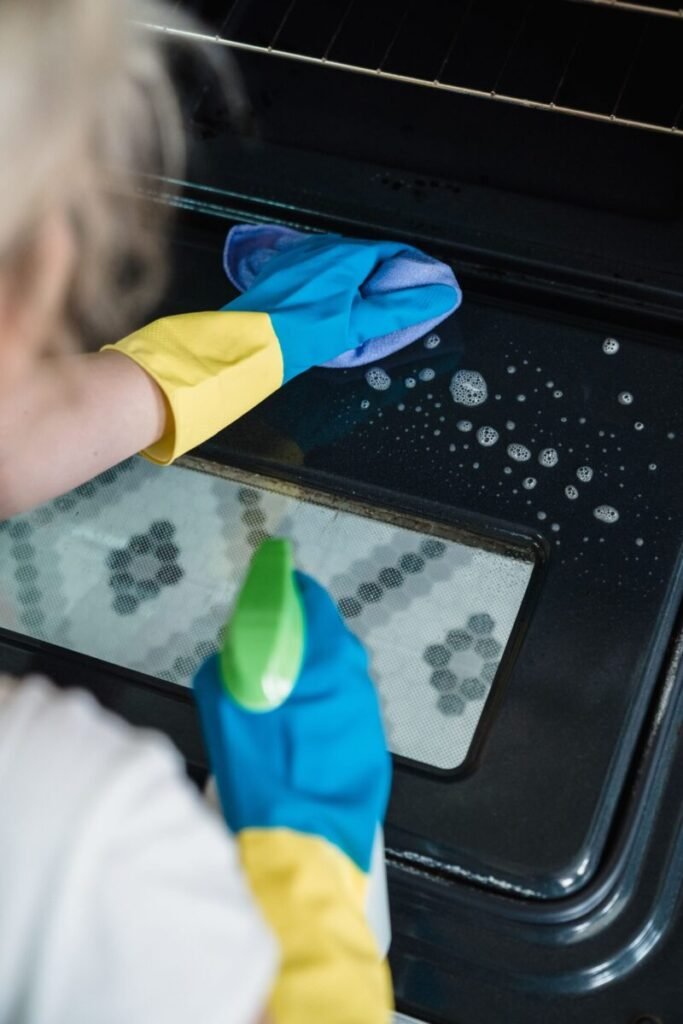
To treat existing stains:
- Fill a spray bottle with equal parts white vinegar and water, or simply rub the cut side of a lemon over the stain.
- Let it sit for five to ten minutes so the acid has time to break down the mineral deposit.
- Wipe with a soft cloth, rinse with clean water, and dry immediately.
For an ongoing fix rather than a repeated chore, keep a dry cloth near the sink and wipe the steel every time it gets wet. Since hard water stains only form as water evaporates, drying the surface before that happens stops the problem at the source.
Deep-Cleaning Grease and Fingerprints
Cooking oil and repeated handling leave a film that soap and water alone won’t fully lift. For this, baking soda does the heavy work:
- Mix baking soda with a small amount of water until it forms a thick paste.
- Apply it to greasy or stained patches with a soft cloth or your fingertips, never a scrubber.
- Rub gently in the direction of the grain — pressure, not friction against the grain, is what lifts the grease.
- Wipe clean with a damp cloth, then dry.
For fingerprints specifically, a few drops of dish soap on a dry microfiber cloth, buffed in circular motions, usually removes them without a full wash. Once the surface is clean, a few drops of olive or coconut oil rubbed in with a fresh cloth adds shine and makes the next round of fingerprints easier to wipe away.
Cleaning a Stainless Steel Chimney or Hood
Kitchen chimneys take the worst of it in an Indian kitchen — the combination of high-heat frying and tempering (tadka) coats the hood and filter in sticky, baked-on oil that plain soap barely touches.

Here’s an approach that works for both the exterior and the mesh or baffle filters:
- Exterior panel: Wipe with warm soapy water first to lift loose grease, then follow with a baking soda paste on any stubborn patches, wiping in the direction of the grain.
- Filters: Soak removable filters in hot water with a generous squeeze of dish soap (or a spoon of washing soda) for 20–30 minutes before scrubbing gently with a soft brush. This loosens baked-on grease that a quick wipe never will.
- Frequency: In a kitchen that fries or tempers daily, the filter benefits from a soak every two to three weeks; the exterior panel can go longer between deep cleans if you wipe it after cooking.
Letting chimney grease sit for months turns a five-minute wipe into an hour of soaking and scrubbing, so treating this as a recurring task rather than an occasional deep clean saves real effort later.
What Not to Use on Stainless Steel
A few common habits do quiet, cumulative damage to a steel finish:
- Steel wool or scouring pads – scratch the surface permanently, and the scratches then trap dirt.
- Bleach or chlorine-based cleaners – can pit and corrode steel, especially with repeated use.
- Undiluted vinegar left on for a long time – fine for a quick treatment, but prolonged, repeated exposure can dull certain coated or fingerprint-resistant finishes.
- Glass cleaners with ammonia – many households reach for a glass cleaner out of habit since it’s already in the kitchen; ammonia-based formulas can strip the protective coating on some fingerprint-resistant steel finishes over time. Check the appliance’s label first.
- Cleaning against the grain – not a chemical issue, but it’s the single most common cause of the hazy, scratched look that makes steel appliances look older than they are.
If your appliance has a fingerprint-resistant or coated finish, check the manufacturer’s manual before using vinegar, baking soda, or any dedicated steel cleaner — coated finishes sometimes need gentler treatment than plain stainless steel.
Keeping It Shining Between Cleans
A little daily upkeep means far less deep cleaning later:
- Wipe handles and door fronts weekly — these get touched the most and show fingerprints first.
- Keep a dry cloth near the sink and stove to catch splashes and condensation before they dry into spots.
- During monsoon months, dry appliance surfaces a little more often; trapped humidity on lower-grade steel can occasionally lead to faint surface spotting.
- After a deep clean, a light buff with a few drops of oil on a soft cloth adds a protective sheen and makes the next cleanup easier.
None of this needs to be elaborate. A one-minute wipe after cooking prevents most of the buildup that eventually needs a scrub.
FAQs
Is vinegar safe on all stainless steel appliances? Yes, for plain stainless steel. Go gentler — or skip it — on appliances with a fingerprint-resistant or specially coated finish, since prolonged acid exposure can wear down that coating.
Can I use a glass cleaner like Colin on my steel fridge? Occasionally it’s fine for a quick shine, but avoid making it a habit. Ammonia in some glass cleaners can dull coated finishes with repeated use — a mild soap solution is safer for regular cleaning.
Why does my steel chimney turn dull or yellowish over time? This is usually baked-on cooking oil rather than damage to the steel itself. A baking soda paste or a hot soapy soak for the filters will typically restore the original shine.
Does hard water permanently damage stainless steel? Not usually. Hard water stains are surface mineral deposits, not corrosion, and they come off with vinegar or lemon juice. Leaving them for months without cleaning does make them harder to shift, though.
How often should I clean stainless steel appliances? A quick wipe after cooking, a proper wash weekly, and a deep clean with baking soda or a chimney filter soak every two to three weeks in a kitchen that cooks daily.
What’s the best homemade cleaner for stainless steel? Mild dish soap and warm water handles most everyday cleaning. Keep vinegar or lemon for hard water stains, and baking soda paste for grease — using the mildest option that works avoids unnecessary wear on the finish.
The Takeaway
Cleaning stainless steel appliances comes down to three habits: wipe with the grain, dry surfaces before water spots form, and reach for baking soda or vinegar rather than anything abrasive. Build that into your regular kitchen routine, and the deep-cleaning sessions become the exception rather than the norm.
If your kitchen has a broader deep-cleaning routine already published on your site — for cabinets, hobs, or modular kitchen maintenance — this is a natural post to link from and to.
-have you checked Filterless vs Baffle Filter Chimney : Which Should You Buy for Indian Cooking?
One Reply to “How to Clean Stainless Steel Appliances: A Complete Guide for Indian Kitchens”
[…] in the household — your money may be better spent on improving ventilation or investing in good exhaust and cleaning habits […]