
A microwave oven purchase in an Indian kitchen usually comes down to three names on every e-commerce filter: Samsung, LG, and IFB. All three sell solo, grill, and convection models in a similar 20–32 litre range, so spec sheets look nearly identical at first glance — and that’s exactly where buyers get stuck comparing the wrong things.
This microwave oven comparison breaks down where Samsung, LG, and IFB actually differ: the solo-versus-convection difference first, brand-specific technology second, and real price and warranty terms last — so you’re comparing what matters instead of just badge names.
Solo, Grill, or Convection — The Microwave Oven Difference to Sort Out First
Before comparing Samsung, LG, and IFB against each other, it’s worth settling a more basic microwave oven difference: solo, grill, and convection are three different appliances wearing the same box shape. Buying the wrong type is a bigger mistake than buying the “wrong” brand within the right type.
What a Solo Microwave Oven Can (and Can’t) Do
A solo microwave oven does one job — heating food using microwave radiation alone. That covers reheating, defrosting, and basic cooking like steaming vegetables or boiling rice. It can’t bake, grill, brown, or crisp anything, because there’s no heating element or fan inside, only the magnetron.
Solo models are the cheapest and mechanically simplest of the three types across all three brands — fewer parts means fewer failure points. If your kitchen already has an OTG or gas oven for baking, and the microwave’s job is strictly reheating tiffins and defrosting, a solo model covers everything you need at the lowest price.
Where Grill and Convection Take Over
A grill microwave adds a heating coil above the cavity for browning and crisping — grilled sandwiches, tandoori-style snacks, or a browned finish on a dish. A convection microwave goes further, adding a fan and heating element that circulate hot air, letting it bake, roast, and cook the way a full oven does — cakes, roti, roast chicken, and multi-stage recipes that combine microwave and oven functions in one cycle.
The real-world difference in daily use: a solo model reheats leftovers in two minutes; a convection model can bake a cake, but needs a preheat cycle and a learning curve that first-time convection buyers often underestimate.
Samsung Microwave Oven: What Sets It Apart
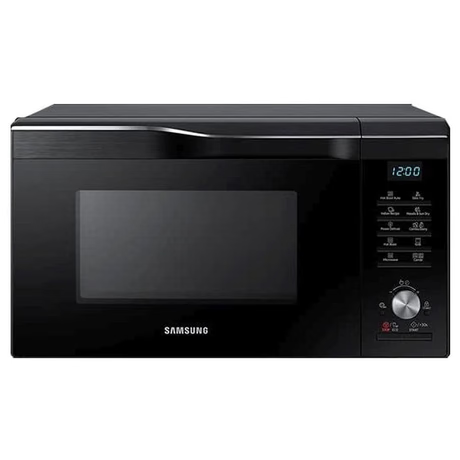
A Samsung microwave oven line runs solo, grill, and convection, with capacities from around 20 litres up to 35 litres and power output between 800W and 1500W depending on the model. What differentiates Samsung from the other two brands is less about types and more about built-in cooking modes.
Samsung’s Solo and Convection Range
Samsung’s convection models carry Slim Fry — the brand’s oil-free air-frying mode — alongside Hotblast technology for faster, more even heat distribution, plus dedicated tandoor, curd-making, and dough-proofing settings aimed at Indian kitchens specifically. Higher-end convection models add Sensor Cook, which adjusts time and power automatically based on food moisture, and a scratch-resistant ceramic-enamel cavity rather than plain steel.
The entry-level solo range keeps things simpler — auto-cook menus, child lock, and a deodorization function — without any of the convection extras, at a noticeably lower price.
Samsung Warranty and Price Range
Samsung microwave ovens in India span roughly ₹5,500 for a basic 23-litre solo model up to around ₹29,000 for a 35-litre convection oven with the full feature set. Coverage typically includes a standard 1-year comprehensive warranty on the product, with select convection models offering an extended warranty on the cavity itself — worth checking model-by-model rather than assuming it applies across the whole range.
LG Microwave Oven: What Sets It Apart
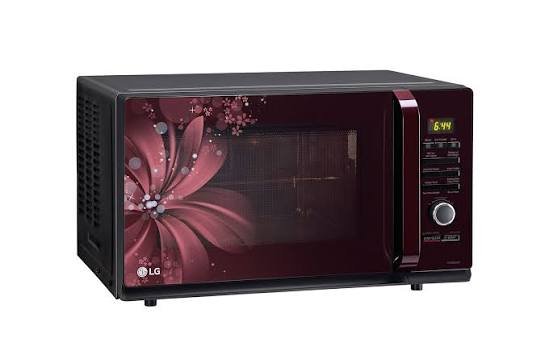
An LG microwave oven distinguishes itself mainly through two technologies: NeoChef Smart Inverter and Charcoal Lighting Heater, both aimed at problems solo and basic convection models don’t address.
LG’s Charcoal Convection and Smart Inverter Line
NeoChef Smart Inverter controls cooking power directly rather than cycling the magnetron fully on and off, which LG positions as more even reheating and defrosting than standard cycling delivers. Charcoal Lighting Heater, used across LG’s Charcoal Convection range, is built around a heating element LG says browns and crisps food closer to tandoor-style cooking than a standard quartz or coil heater manages.
LG’s higher convection models also add Diet Fry (the brand’s air-fry mode), a 360-degree motorised rotisserie, and ThinQ WiFi with Scan-to-Cook, which reads a recipe card’s barcode and sets the cook program automatically. Entry LG solo models skip all of this — mechanical dial or basic membrane controls, auto-cook menus, and not much else.
LG Warranty and Price Range
LG microwave ovens run from around ₹5,150 for a base 20-litre solo model to roughly ₹25,000 for a 32-litre Charcoal Convection unit. LG’s fine print matters here: most models carry a standard 1-year warranty on the product, with a separate long-term warranty that applies only to the Charcoal Heater component — not the whole appliance — so confirm exactly what’s covered before treating an “extended warranty” badge as a blanket claim.
IFB Microwave Oven: What Sets It Apart
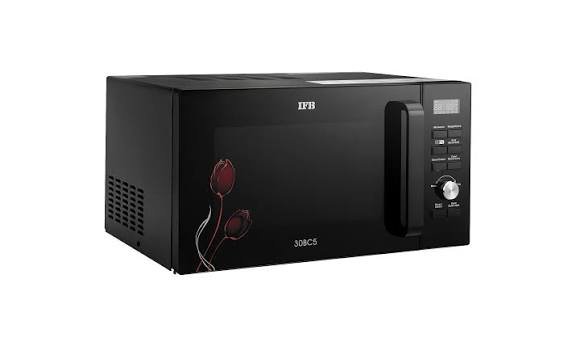
IFB’s microwave ovens lean less on flashy tech names and more on India-specific cooking presets and a warranty structure that’s noticeably more generous on paper than Samsung’s or LG’s.
IFB’s Solo, Grill, and Convection Lineup
IFB’s convection range includes multi-stage cooking (running microwave, grill, and convection in one sequence without manual switching), Air Fry, and cooking presets built around Indian staples — homemade paneer in under 10 minutes, ghee-making modes, and over 100 auto-cook menus on some models. Steam Clean, Disinfect, and Deodorize functions round out the hygiene side, including a mode marketed for sterilising baby bottles and utensils.
IFB’s solo and grill models are more basic by comparison — mechanical knob control, weight-based defrost, and a standard child safety lock — built for reheating-first households rather than baking-first ones.
IFB Warranty and Price Range
IFB microwave ovens start around ₹6,900 for a basic solo model and run past ₹45,000 for premium convection units with the full Indian-cooking preset list. The standout is warranty: IFB’s typical structure is 1 year comprehensive on the whole product, plus 3 years specifically on the magnetron and cavity, plus 6 years of spare-part support — a longer combined coverage window than either Samsung’s or LG’s standard terms, backed by IFB’s own network of roughly 500-plus IFB Point service centres across India.
Samsung vs LG vs IFB: Side-by-Side Comparison
| What to check | Samsung | LG | IFB |
|---|---|---|---|
| Types available | Solo, Grill, Convection | Solo, Grill, Convection (incl. Charcoal Convection) | Solo, Grill, Convection |
| Capacity range | 20L – 35L | 20L – 32L | 20L – 36L |
| Signature tech | Slim Fry, Hotblast, Sensor Cook | Charcoal Lighting Heater, NeoChef Inverter, ThinQ WiFi | Multi-stage cooking, Air Fry, Indian preset menus |
| Entry price (solo) | ~₹5,500 | ~₹5,150 | ~₹6,900 |
| Top convection price | ~₹29,000 | ~₹25,000 | ~₹45,000+ |
| Warranty (typical) | 1 yr product; extended cavity cover on select models | 1 yr product; long-term cover on Charcoal Heater only | 1 yr product + 3 yr magnetron/cavity + 6 yr spare parts |
On paper, Samsung and LG price similarly at the entry end, while IFB starts slightly higher on solo models but pulls ahead on warranty math — years of magnetron and cavity coverage stacked on top of the base year. Where IFB’s convection range gets noticeably more expensive is at the top end, driven by multi-stage cooking and the wider Indian-preset menu list rather than raw wattage or capacity.
Which Brand Should You Buy? By Kitchen Use Case
- Reheating and defrosting only, tightest budget: LG’s base solo range is typically the cheapest entry point of the three.
- Daily Indian cooking presets (paneer, ghee, curd, tandoor-style): IFB’s convection range covers this most directly, with the deepest preset menu list.
- Baking-focused household (cakes, bread, roasting): Samsung’s Slim Fry and Sensor Cook convection models, or LG’s Charcoal Convection line, both handle this well — choose based on whether WiFi/Scan-to-Cook (LG) or automated Sensor Cook (Samsung) matters more to you.
- Longest warranty on core components: IFB’s 3-year magnetron/cavity plus 6-year spare-part support beats the standard 1-year terms most Samsung and LG models carry outside their component-specific extensions.
Who Should Buy a Solo Microwave Oven — and Who Needs Convection
Buy a solo microwave oven if your kitchen already has a way to bake — an OTG, a gas oven, or you simply don’t bake at home — and the microwave’s job is reheating, defrosting, and basic cooking. It’s the cheapest option across Samsung, LG, and IFB, with fewer parts to fail and a smaller footprint for compact kitchens.
Buy a convection model if baking, grilling, or Indian-cooking presets like tandoor-style dishes and paneer-making are things you’ll actually use monthly, not just at setup. The price jump from solo to convection is real — often ₹8,000–₹15,000 more for a comparable capacity — and it’s wasted money if the appliance ends up doing solo-level tasks anyway.
If you’re setting up a full Indian kitchen rather than a single appliance, our mixer grinder buying guide and induction cooktop guide cover two other appliances most kitchens sort out around the same time. And if you’re timing this purchase around a sale, our appliance sale-season checklist is worth a read before you check out.
Frequently Asked Questions
What is the real difference between a solo and convection microwave oven? A solo microwave oven only reheats, defrosts, and does basic cooking using microwave radiation. A convection microwave adds a fan and heating element, letting it bake, roast, and grill like a full oven — the trade-off is a higher price and a preheat step solo models don’t need.
Is a Samsung microwave oven better than an IFB microwave oven? Neither is universally better. Samsung’s Slim Fry and Sensor Cook suit baking-focused kitchens, while IFB’s longer magnetron and cavity warranty and deeper Indian-preset menu suit households that lean on daily Indian cooking presets and want stronger warranty coverage.
Which is better for Indian cooking — LG or IFB microwave oven? IFB’s convection range is built more specifically around Indian presets — paneer, ghee, tandoor-style cooking — while LG’s Charcoal Convection line focuses on browning and crisping through its Charcoal Lighting Heater. Households cooking Indian staples daily typically get more direct use from IFB’s preset list.
Does a higher price always mean a better microwave oven? No. Price mostly tracks type (solo vs grill vs convection) and added features like WiFi control or extra auto-cook menus, not raw cooking performance. A solo model that matches your actual use is a better buy than an expensive convection model with features you won’t use.
How much more does a convection microwave oven cost than solo? Across Samsung, LG, and IFB, the realistic gap for comparable capacity is roughly ₹8,000 to ₹15,000, sometimes more at the premium end of each brand’s convection range.
Also check: Zero Water Wastage RO Purifiers: Real or Marketing?
One Reply to “Microwave Oven Comparison: Samsung vs LG vs IFB (2026)”
Nice post. This Vision Washing Machine collection might help anyone checking different models.